


8/4/2026

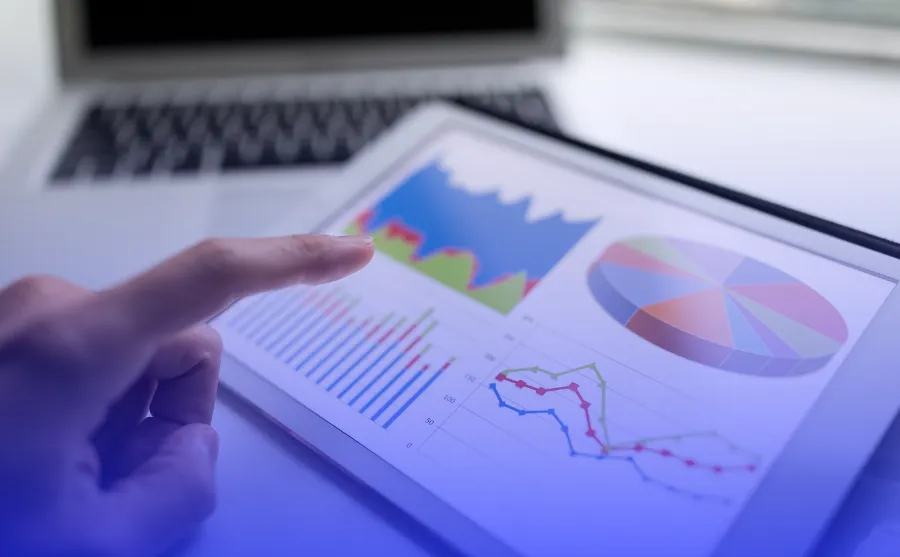
For many years, meters were considered purely technical tools, designed to record consumption and provide the data needed for billing. With the advent of smart metering, this view has changed radically. Today, smart meters are no longer simply a measurement point, but an interface between utilities and customers, capable of generating continuous information and transforming data into an awareness tool.
In a context where sustainability increasingly depends on the daily choices of citizens and businesses, smart metering takes on a new role: helping people understand their energy and water usage, providing the necessary information to change it. It's not simply about better metering, but about enabling more informed decisions, reducing waste, and promoting more efficient use of resources. This evolution fits perfectly with the objectives of the European energy transition, which gives consumers an increasingly active role in managing demand and building more flexible and sustainable energy systems.
Numerous studies in behavioral science have shown that it's difficult to change a habit when its effects are unknown. For decades, most consumers had access to their consumption only through a bill received weeks or months after actual use. Under these conditions, linking a specific behavior to its economic or environmental impact was virtually impossible.
Smart metering breaks this pattern. The availability of data updated much more frequently than traditional systems allows consumption trends to be observed in near real time. Customers can understand which appliances impact their bill the most, which time slots are most expensive, or how certain habits influence overall consumption.
Data thus becomes an educational tool, capable of transforming technical information into practical knowledge.
However, simply having data is not enough. For change to occur, the information must be presented at the right time and in an easily understandable format.
This is where intuitive dashboards, mobile apps, personalized notifications, and alert systems come into play. An alert reporting abnormal consumption at night or a comparison with the average consumption of similar homes can have a much more effective impact than generic energy saving communications.
Behavioral science research shows that immediate feedback is one of the key drivers of habit change. Knowing how much someone is consuming while their behavior can still be changed allows users to take timely action, avoiding waste and improving efficiency.
For this reason, smart metering is increasingly being considered a behavior change tool, a tool for supporting behavioral change, as well as a measurement technology.
The growing diffusion of renewable energy is profoundly changing the functioning of grids. Distributed generation, energy communities, storage systems, and electric mobility require more active consumer participation.
In this new scenario, knowing your consumption is not enough: it also becomes important to know when you consume.
Smart metering enables this evolution by providing detailed time data that allows certain uses to be shifted to times when renewable energy availability is greater or overall grid demand is lower. This is the principle underlying demand response, one of the strategies the European Union is focusing on to increase the flexibility of the electricity system.
In the water sector, too, the availability of timely information allows users to identify domestic leaks, anomalous consumption, or inefficient use, contributing to more responsible management of the resource.
The evolution of smart metering is leading to increasingly personalized communication. Thanks to artificial intelligence, utilities can analyze consumption profiles and offer specific suggestions for each customer. These are no longer generic energy saving tips, but recommendations based on actual user habits.
An algorithm can, for example, identify recurring consumption patterns during peak hours, highlight opportunities to modify certain usage patterns, or suggest energy efficiency measures with the greatest economic return. This personalization significantly increases the effectiveness of customer engagement policies and helps create a more collaborative relationship between utilities and consumers.
Behavior change not only produces economic benefits for users, but also generates measurable environmental and social impacts. Reducing consumption means reducing energy and water demand, limiting indirect emissions associated with resource distribution, and improving the overall efficiency of infrastructure.
For utilities, these results can be monitored and reported through ESG indicators, objectively demonstrating the contribution of digital engagement and responsible consumption initiatives. Smart metering thus becomes a tool that connects technology, sustainability, and social responsibility.
For data to truly influence consumption behavior, it must be reliable, timely, and easily accessible. The smart metering solutions developed by Terranova are designed specifically to transform data collected by smart meters into actionable information for utilities and end users.
Through a Meter Data Management platform capable of integrating data from multi-vendor and multi-commodity devices, Terranova ensures the quality and availability of information throughout its lifecycle. This allows utilities to feed customer portals, dashboards, and digital services with updated and validated data, offering users a clear view of their consumption.
The availability of reliable data also provides the basis for developing more advanced features, such as alert systems for abnormal consumption, comparative analysis, personalized recommendations, and efficiency-oriented artificial intelligence applications. In this way, data is not confined to the utility's internal processes, but becomes a concrete tool for encouraging more sustainable behavior and building a more transparent and participatory relationship with customers.
Smart metering is changing the very meaning of measurement. From a simple technical tool, the smart meter is becoming a central element in the relationship between utilities and consumers, making data a driver of change.
The ability to promptly monitor consumption, receive personalized feedback, and understand the impact of their choices allows users to adopt more informed behaviors, contributing to environmental sustainability and network efficiency goals.
For utilities, this evolution represents a strategic opportunity: not simply distributing a resource, but guiding customers and communities toward a more intelligent, responsible, and resilient consumption model. In this sense, the true value of smart metering lies not only in measuring what happens, but in creating the conditions for behaviors to evolve, transforming every piece of data into a lever for change.
8/4/2026

5/10/2026

7/20/2025

Want to know more?
We’d be happy to talk more in detail about your needs and explore how we can become your ideal partner, to assist you in your business venture of innovation, digitization and sustainability